

Effective Ways to Stop Leg Twitching: 7 Practical Steps
Table of Contents
- Why Leg Twitching Happens and What Usually Helps
- Leg Twitching at Night: A Step-by-Step Plan to Settle Down
- Leg Twitching While Sitting: Fixes for Desks, Cars, and Long Flights
- The Difference Between Leg Twitching and Restless Legs Syndrome
- Muscle Twitching in Leg: When to Worry
- Everyday Habits That Reduce Twitching: Sleep, Caffeine, and Movement
- Relaxation Techniques and Simple Tools That Can Help
- Conclusion
- Frequently Asked Questions
Last Updated: October 17, 2026
Why Leg Twitching Happens and What Usually Helps
Leg twitching is a sudden, brief tightening of a muscle in the leg that you cannot control.
The good news: most twitching settles on its own. The Cleveland Clinic overview of muscle twitching notes that harmless muscle twitches are common and usually fade without treatment.
This guide from VIM Collective explores practical, drug-free ways to support everyday leg comfort, encourage relaxation, and better understand occasional muscle twitching.
Here's what most guides get wrong: they treat all leg twitching as one problem.
Leg Twitching at Night: A Step-by-Step Plan to Settle Down
Nighttime twitching often shows up right as you finally relax, which is exactly when you least want to get up and troubleshoot. The plan below takes about 15 minutes and works best as a wind-down routine before you get into bed.
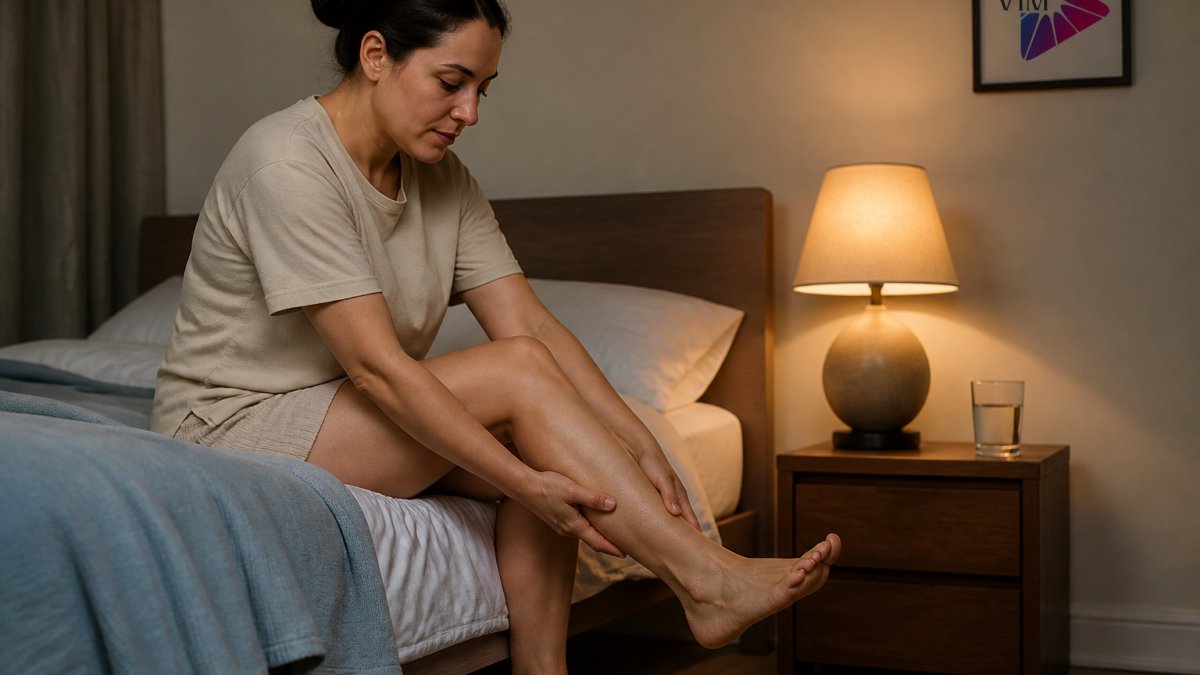
Step 1: Reset Your Position and Release Tension
Stand up and shake out both legs for about 20 seconds. Then sit on the edge of the bed and let your feet hang loose. A common mistake is staying frozen in one position, hoping the twitch stops. It usually won't. Give the muscle a change of scenery first.
If you have been sitting for a long stretch before bed, add a slow walk around the room for one to two minutes. The goal is gentle motion, not a workout.
Step 2: Apply Gentle Heat or Cool, Then Stretch
Try a warm compress or a cool pack on the twitching area for a few minutes. Warmth tends to suit tight, tired muscles; coolness tends to suit a muscle that feels hot or irritated. Pick whichever feels more comfortable, not whichever is "correct."
Then stretch slowly and hold each position for about 20 seconds:
- Calf stretch: press your heel toward the floor
- Thigh stretch: pull your heel toward your seat while standing
- Ankle rolls: 10 slow circles in each direction
Keep the stretch gentle. Bouncing or forcing a deep stretch can make a twitchy muscle more irritable.
Step 3: Calm the Body With Breath and Pressure
Slow breathing helps your whole body settle. Try four seconds in and six seconds out, for ten rounds. Some people find it easier to count on their fingers or follow a pacing app.
For gentle, targeted pressure, the VIM Band uses a soft EVA foam ball held beneath the foot by an adjustable fabric band. It is designed for comfort and relaxation while seated or lying down, typically for 10–15 minutes per session while awake.

Step 4: Decide Whether to Get Up or Stay Put
If the twitch is a brief flicker, stay in bed and let it pass. If it keeps pulling you awake, get up for five minutes rather than lying there frustrated. A short, dimly lit walk to the kitchen for water, then back to bed, often breaks the cycle better than staying still.
Step 5: Note What Happened (Optional but Useful)
If nighttime twitching is a recurring pattern, a simple note on your phone can help. Jot down the time it started, what you ate and drank that evening, how active you were that day, and how long it lasted. After a week or two, patterns often emerge, and that log is useful information to bring to a healthcare professional if you decide to check in.
Leg Twitching While Sitting: Fixes for Desks, Cars, and Long Flights
Leg twitching while sitting can have several causes, including fatigue, stress, or muscle overuse. Taking regular movement breaks and changing positions may help improve comfort during long periods of sitting.
At a desk, try this every 30 to 45 minutes:
- Stand and roll your ankles ten times each
- Do three slow calf raises
- Walk to refill your water
On long drives, pull over when safe and take a two-minute walk. In the air, point and flex your feet under the seat, and get up when the seatbelt sign allows. Travelers often find that a portable pressure tool fits easily into this routine.
The Difference Between Leg Twitching and Restless Legs Syndrome
The difference between leg twitching and restless legs syndrome comes down to control and urge. A twitch is a quick, involuntary flicker you cannot stop. Restless legs syndrome (RLS) brings an urge to move the legs, usually along with uncomfortable sensations that get worse at rest and in the evening.
Key differences:
Feature |
Leg Twitching |
Restless Legs Syndrome |
|---|---|---|
What it feels like |
Quick, brief muscle flicker |
Urge to move, crawling or tingling feelings |
Can you stop it? |
No, it happens on its own |
Moving the legs eases it |
Timing |
Any time, often after strain |
Worse at rest and in the evening |
How long it lasts |
Seconds |
Symptoms may improve temporarily with movement but can return during rest |
Occasional twitching is not the same as RLS. If the urge to move is a daily pattern that disrupts your sleep, that is worth raising with a healthcare professional.
Muscle Twitching in Leg: When to Worry
Muscle twitching in the leg is usually harmless, but some signs mean it is time to get it checked. The NHS guidance on muscle twitching and cramps recommends seeking advice when twitching is persistent or comes with other symptoms.
VIM Band for Restless Leg Relief →
Contact a healthcare professional if you notice:
- Twitching that continues for weeks without easing
- Weakness, shrinking, or loss of feeling in the leg
- Twitching after an injury or with severe pain
- Symptoms that keep you from sleeping night after night
This article offers general wellness information only. It is not medical advice, and it does not replace an evaluation from a qualified professional.
Everyday Habits That Reduce Twitching: Sleep, Caffeine, and Movement
Healthy daily habits may help reduce occasional muscle twitching associated with fatigue, stress, or lifestyle factors. The most helpful approach depends on what is causing the twitching. Small, steady changes beat one-off fixes, and the specifics matter more than the general advice. Below are the habits worth focusing on, with concrete ways to put each one into practice.
Build a Consistent Sleep Schedule
Go to bed and wake up at the same time each day, weekends included. Tired muscles twitch more, and a steady schedule gives your body a predictable reset window. A practical target is seven to nine hours of sleep for most adults, with a consistent wake time being the anchor. If you are resetting a schedule, shift your bedtime by 15 minutes at a time rather than an hour at once.
Cut Back on Caffeine and Alcohol Before Bed
Caffeine can keep muscles on edge. A common guideline is to move your last coffee, tea, or energy drink to early afternoon, roughly eight hours before bed. Remember that chocolate, some sodas, and certain teas also carry caffeine.
Alcohol can disrupt sleep quality even when it helps you fall asleep. Keep evening drinks light and early, and try a glass of water between each drink. If you notice twitching is worse after a heavier evening, that is a useful pattern to note.
Move More During the Day
Moderate exercise, like a 20-minute walk or light cycling, gives muscles healthy use. The key is consistency rather than intensity. A short walk after dinner is an easy add-on that doubles as wind-down time. Stretching before bed and a warm bath in the evening are simple additions that many people find soothing.
Stay Hydrated Without Overdoing It
Dry, tired muscles tend to act up. Keep water within reach during the day and sip steadily rather than gulping large amounts at once. If you exercise or travel, pay extra attention, since both increase fluid loss. A simple check is urine color: pale yellow is a reasonable everyday target.
Keep a Simple Trigger Log
If twitching is a recurring pattern, a short log can be more useful than any single habit change. For one to two weeks, note:
- When the twitching happens (time of day, before or after sleep)
- What you ate and drank that day, especially caffeine and alcohol
- How active you were, and whether you sat for long stretches
- Any changes in routine, travel, or stress
Patterns often emerge within a week or two. That log is also useful information to bring to a healthcare professional if you decide to check in.
Relaxation Techniques and Simple Tools That Can Help
Relaxation techniques target the tension that feeds twitching. Slow breathing, gentle massage, and progressive muscle relaxation, where you tense and release each muscle group in turn, are all easy to learn.
Simple tools can support the routine:
- A warm compress or heat pack for tight muscles
- A foam roller for gentle self-massage
- A soft pressure ball under the foot while seated
The VIM Band fits into this last category. It comes as a set of two bands, one for each leg, with a non-slip design that keeps the pressure ball in place. It is meant for seated or lying-down use only, never for walking or standing.
Conclusion
Twitching that keeps interrupting your evenings is frustrating, but most everyday cases respond to simple changes: a steady sleep schedule, less caffeine late in the day, more movement, and a calm wind-down routine.
VIM Collective makes the wind-down easier with the VIM Band, a drug-free, non-electronic option that provides targeted pressure under the foot while you sit or lie down.

Get started with VIM Collective and give your evenings a calmer, more restful rhythm.
Frequently Asked Questions
What's the difference between a leg twitch and a muscle spasm?
A twitch is a small, quick, involuntary flicker of a muscle that you can often see under the skin but usually can't control. A spasm is a stronger, longer contraction that can feel tight and sometimes painful. Twitches are common and often harmless, while spasms are more likely to follow fatigue, dehydration, or overuse. If spasms are frequent or painful, it's worth mentioning to a healthcare professional.
How can I stop leg twitching while sitting at my desk or on a flight?
Stand up and walk for a minute if you can, or do seated calf raises and ankle circles to break up the stillness. Adjust your position so your legs aren't pressed against a hard edge, and keep your feet flat rather than tucked. Staying hydrated and limiting caffeine during long sitting stretches can help too. For travel, a small foot roller or a targeted pressure tool used while seated is an easy, drug-free option to add to your routine.
Are leg twitches and Restless Legs Syndrome the same thing?
No. Leg twitching is a visible muscle flicker, while Restless Legs Syndrome (RLS) involves an uncomfortable urge to move your legs, usually worse in the evening or at rest. RLS is a clinical diagnosis made by a healthcare professional, and it isn't the same as occasional twitching. If you notice a strong urge to move, tingling, or symptoms that disrupt sleep most nights, talk to a qualified healthcare professional rather than assuming it's simple twitching.
When should I talk to a healthcare professional about leg twitching?
Consider booking an appointment if twitching is persistent, spreads to other muscles, comes with weakness, numbness, or pain, or starts after a new medication. Also seek advice if it regularly disrupts your sleep or affects daily life. Most occasional twitching is harmless, but a professional can rule out other causes and give you guidance specific to your situation. This article is educational and not a substitute for medical advice.