

Managing Leg Discomfort During Office Work: A Desk Guide
Table of Contents
- Why Leg Discomfort Shows Up During Office Work
- How Often to Take Breaks From Sitting (and What to Do in Them)
- Desk Stretches for Legs You Can Do Without Leaving Your Chair
- Office Chair Setup for Leg Comfort
- Everyday Habits That Ease Leg Fatigue at Work
- VIM Band Targeted Pressure Under the Foot: An Optional Comfort Tool
- Tracking Symptoms and Knowing When to Seek Advice
- Conclusion
- Frequently Asked Questions
Last Updated: October 21, 2026
Why Leg Discomfort Shows Up During Office Work
Leg discomfort during office work is a common complaint, and spending long periods in the same position can be one contributing factor. This guide from VIM Collective covers why that happens and what you can do about it, without turning your workday upside down.
Sitting for hours slows the natural "calf muscle pump." That pump is the group of muscles in your lower legs that squeezes with each step and helps move blood back up toward your heart. When you sit still, the pump goes quiet. Fluid can pool, muscles stiffen, and by 3 p.m. your legs may feel heavy and restless.
Standing all day brings its own set of problems. Muscles stay tensed, and pressure builds in the feet and lower legs.
The good news: small, regular changes can help improve everyday leg comfort. Below, we'll show you exactly how to build them into a normal desk day.
Sitting-Related vs. Standing-Related Discomfort
The two feel different, and they need different fixes.
Sitting-related discomfort tends to build slowly. You may notice:
- Heaviness or aching in the calves
- Stiffness when you first stand up
- Swelling around the ankles by late afternoon
- A restless, jittery feeling that makes you want to move
Standing-related discomfort often shows up as:
- Tired, achy feet
- Tightness in the calves
- Pressure in the knees and lower back
If your legs bother you mostly after long sitting, movement breaks are your best tool. If standing is the trigger, changing position and shifting weight matter more.
When It Is Not Restless Legs Syndrome
Not every uncomfortable leg is restless legs syndrome (RLS). RLS is a specific condition, and it is usually diagnosed by a healthcare professional, not self-labeled after one bad afternoon at your desk.
A common mistake is assuming any evening restlessness means RLS. In practice, many cases of office-related leg discomfort come from long sitting, dehydration, or plain muscle fatigue.
See a healthcare professional if symptoms are persistent, getting worse, or worrying you. That is the right step, and it is not something to sort out alone.
How Often to Take Breaks From Sitting (and What to Do in Them)
Stand up and move at least once every 30 to 60 minutes. Even two minutes of movement helps reset your legs and breaks up the stiffness that builds during long desk work. That is the baseline. The harder part is turning it into something you actually do on a busy Tuesday.
Set a timer. Relying on memory usually fails by mid-morning. A phone alarm, a calendar reminder, or a smartwatch nudge all work; pick one and treat it like any other meeting on your schedule.
A Simple Timed Break Schedule for a Desk Day
You do not need a perfect routine. You need a repeatable one. Here is a pattern many office workers find manageable:
- Every 30 to 60 minutes: a 1 to 2 minute seated or standing reset (see the menu below).
- Every 2 hours: a 3 to 5 minute standing break that takes you away from the desk, such as a walk to the printer, the kitchen, or the far end of the hallway.
- Midday: a 10 to 20 minute walk, ideally outside, at lunch.
- Late afternoon: one more short standing break and a few seated stretches before the final push.
If your day is packed with back-to-back calls, attach the breaks to call endings rather than clock times. The point is regularity, not precision.
A Break Menu You Can Rotate
Rotate through these so you are not doing the same thing every hour:
- Stand and walk to the water cooler or around the room for 2 minutes.
- Do 10 heel raises while holding your desk for balance.
- March in place for 30 seconds.
- Shift weight side to side for 30 seconds, then roll your ankles a few times.
- Take a short walk outside at lunch, even 10 minutes.
The U.S. Centers for Disease Control and Prevention physical activity guidance notes that any movement is better than none, which is a useful mindset for busy workdays.
Desk Stretches for Legs You Can Do Without Leaving Your Chair
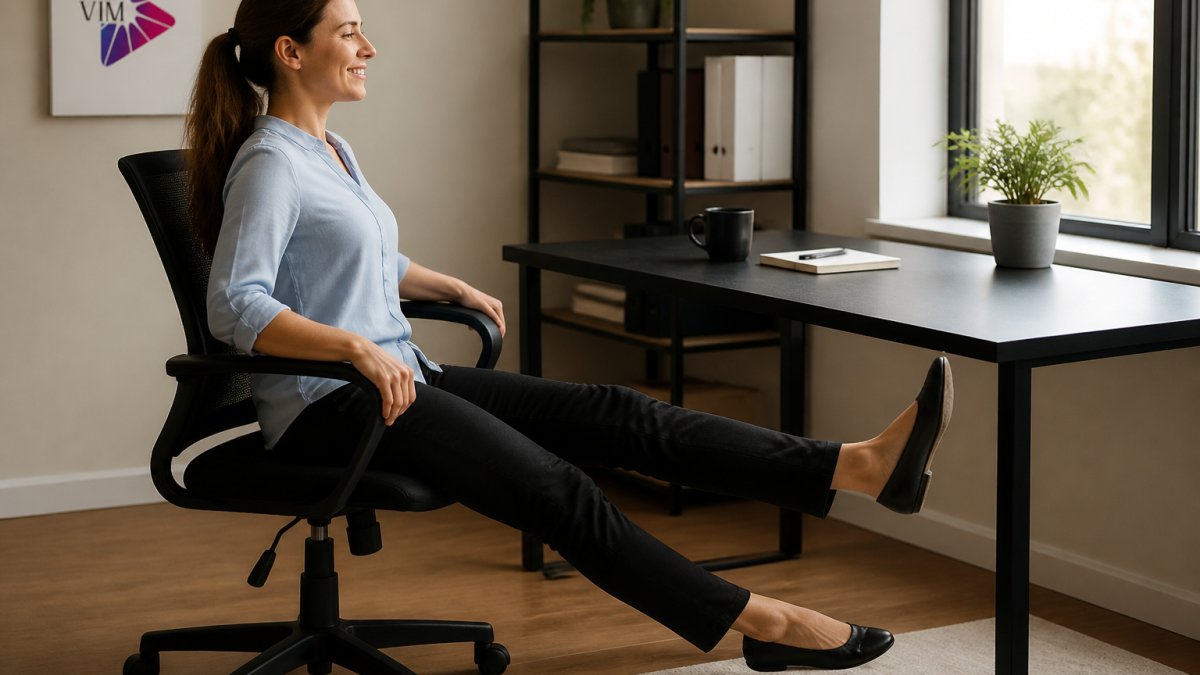
Desk stretches for legs take under a minute each and need no equipment. They ease stiffness and give your calf muscles a gentle wake-up between meetings.
A Simple 5-Minute Desk Stretch Sequence
Run through this once or twice a day:
- Ankle circles (30 seconds each direction): lift one foot and rotate slowly.
- Seated calf stretch (30 seconds per leg): extend one leg, flex your foot toward you, hold.
- Knee lifts (10 per leg): sit tall and lift each knee toward your chest.
- Seated march (30 seconds): alternate lifting feet as if marching.
- Foot rolls (1 minute): roll each foot over a small ball or your shoe.
Keep each stretch gentle. You want a mild pull, never pain.
Office Chair Setup for Leg Comfort
Office chair setup for leg comfort comes down to three settings: seat height, seat depth, and support. Adjusting these settings can help improve seated comfort and reduce unnecessary strain during long workdays.
VIM Band for Restless Leg Relief →
- Feet flat on the floor. If they dangle, lower the chair or add a footrest.
- Two fingers of space behind your knees at the seat edge.
- Thighs roughly level with the floor, not tilted up.
- Lower back supported so you are not slumping.
Also check your screen height. If you crane your neck, you tend to shift your whole body, and your legs pay for it.
Everyday Habits That Ease Leg Fatigue at Work
Small daily habits do more for leg fatigue than any single fix. Think of them as maintenance, not treatment.
- Change position often. Cross and uncross ankles, shift weight, adjust your seat.
- Walk at lunch. A 15 to 20 minute walk gets the calf muscles working.
- Elevate your legs for a few minutes during breaks if they feel heavy.
- Avoid crossing your legs for long stretches.
Shoes, Clothing, and Hydration
What you wear and drink matters more than most people expect.
- Comfortable shoes with a little cushioning beat tight, flat styles for all-day desk wear.
- Comfortable clothing that does not pinch at the waist or calves lets you move freely.
- Hydration supports normal body function. Keep a water bottle within reach and sip through the day.
Compression Garments: What to Know Before You Try Them
Compression socks and graduated compression stockings are popular for long sitting and travel. Graduated compression means the pressure is firmest at the ankle and eases higher up the leg (Graduated compression stockings).
Knee-high stockings are the most common style for desk work. They can feel supportive, but fit matters. A proper fit is snug, not tight, and should never cause numbness or tingling.
If you have a health condition or are unsure whether compression is right for you, ask a healthcare professional first.
VIM Band Targeted Pressure Under the Foot: An Optional Comfort Tool
VIM Band targeted pressure under the foot is a simple, drug-free option some people use for restless, jittery legs while seated. It is a wellness product, not a medical device, and it does not treat or prevent any condition.

The VIM Band uses a soft EVA foam ball to apply gentle, targeted pressure under the arch of the foot. You wear it while seated or lying down and awake, for about 10 to 15 minutes per session. Never walk, stand, or sleep while wearing it.
The VIM Band comes as a set of two adjustable bands, one for each leg. Each band features soft fabric and an EVA foam pressure ball designed to stay comfortably positioned beneath the foot during seated or lying-down use.
For office workers, it fits neatly into a break: sit back, slip on the bands, and let the pressure provide comfort for a few minutes before your next meeting. It is also easy to pack for travel or use at home while unwinding.
Tracking Symptoms and Knowing When to Seek Advice
Track your symptoms for a week or two. A simple note on your phone works: time of day, what you were doing, and how your legs felt.
This helps you spot patterns. Maybe discomfort spikes after three hours of meetings. Maybe it eases on days you walk at lunch. Patterns point to fixes.
Seek advice from a healthcare professional if you notice:
- Symptoms that are persistent or getting worse
- Numbness, tingling, or weakness
- Symptoms that regularly disrupt your sleep
Seek urgent medical attention for new or unexplained pain, swelling, warmth, or redness in one leg, as these can sometimes indicate a blood clot.
These signs deserve a proper look, not a guess.
What You Notice |
Likely Everyday Cause |
Practical Fix |
|---|---|---|
Heavy, achy calves by afternoon |
Long sitting |
Movement breaks every 30-60 minutes |
Stiffness when standing up |
Static posture |
Seated stretches, position changes |
Tired feet after standing |
Prolonged standing |
Supportive shoes, weight shifting |
Evening restlessness |
Fatigue, long sitting |
Walking, leg elevation, wind-down routine |
New or unexplained one-sided pain or swelling |
Possible medical concern |
Seek urgent medical evaluation |
Conclusion
Long office days ask a lot of your legs, and the fix is rarely one big change. It is a handful of small ones: regular movement breaks, a few desk stretches, a chair that fits, and shoes that support you.
If you want a simple, drug-free comfort option to add to your seated breaks, the VIM Band for Restless Leg Relief is designed for exactly that. It uses a soft EVA foam ball for targeted pressure under the foot, with a non-slip, adjustable design and is intended for use in 10 to 15 minute seated sessions.
Small changes can make a meaningful difference in your daily comfort. Explore the VIM Band as a simple, drug-free addition to your seated break routine.
Frequently Asked Questions
Why do my legs hurt when I sit at a desk for a long time?
Long stretches in one position can leave legs feeling tired, stiff, or achy. Sitting for hours keeps the calf muscles inactive and puts steady pressure on the backs of your thighs, and many people also hold tension without noticing. The fix is usually simple: change position regularly, stand up and walk every 30 to 60 minutes, and add a few gentle desk stretches. If discomfort is persistent, one-sided, or getting worse, have a healthcare professional evaluate it.
How often should I take breaks from sitting during the workday?
A practical target is a short break every 30 to 60 minutes. Stand up, walk to the printer or water cooler, or do a one-minute stretch at your desk. You do not need a full workout; brief, frequent movement breaks are easier to keep up than one long break. Pair them with a cue you already have, like the end of a meeting or a timer on your phone, so they actually happen.
Does leg discomfort while sitting automatically mean I have Restless Legs Syndrome?
No. Occasional leg tiredness, stiffness, or achiness during desk work is common and often linked to prolonged sitting, posture, or an uncomfortable chair. Restless Legs Syndrome is a specific condition with its own patterns and should be diagnosed by a qualified healthcare professional, not self-labeled from a rough day at the desk. If symptoms are frequent, disrupt sleep, or concern you, seek professional advice.
Can the VIM Band help with leg discomfort during office work?
The VIM Band is an optional, drug-free comfort tool that provides targeted pressure under the arch of the foot using a soft EVA foam ball. It is designed to be used while seated or lying down and awake, for about 10 to 15 minutes per session. It is not a medical device. Some people find it a soothing part of their desk routine; if discomfort persists, talk with a healthcare professional.