

Natural Remedies for Leg Tingling Sensations
Table of Contents
- What Natural Remedies for Leg Tingling Sensations Can (and Can't) Do
- Why Leg Tingling at Night Feels Worse
- Gentle Stretches for Restless Legs You Can Do Anywhere
- Leg Massage for Tingling Sensations: A Step-by-Step Routine
- Heat, Cold, and Everyday Habits That May Help
- Building a Bedtime Routine for Restless Legs
- Tracking Your Symptoms and Knowing What to Change
- Frequently Asked Questions
Last Updated: October 12, 2026
What Natural Remedies for Leg Tingling Sensations Can (and Can't) Do
Natural remedies for leg tingling sensations can ease everyday discomfort and help you relax, but they are not a substitute for medical care.
Leg tingling is an abnormal sensation in the legs that can feel like prickling, buzzing, or mild numbness. It often comes and goes, and it tends to show up when you sit still for a long time or lie down at night.
Common Everyday Triggers Worth Knowing
- Sitting in one position for hours, such as on a long flight or at a desk
- Crossing your legs for extended periods
- A cold room or cold feet before bed
Many of these triggers are easy to change. Start with the simple ones first.
When Tingling Needs a Professional Opinion
Most occasional tingling is not a cause for alarm. Some patterns are worth a call to a healthcare professional.
- Tingling that spreads, gets worse, or never goes away
- Weakness, dropping things, or trouble walking
- Sudden numbness on one side of the body
Sudden numbness or weakness, especially on one side of the body, can be a medical emergency. Seek immediate medical attention. For persistent or worsening tingling, consult a healthcare professional.
For anything ongoing, a doctor can look at the full picture. This article does not diagnose or treat any condition; it covers comfort measures only.
Why Leg Tingling at Night Feels Worse
Leg tingling at night often feels worse because the distractions of the day are gone. When you lie still in a quiet room, your attention turns inward and every small sensation feels louder. There is a mental loop too: you notice the tingling, worry about sleep, and the worry makes you more alert, so the tingling feels stronger.
A few things tend to make nighttime tingling more noticeable:
- A cool bedroom with cold sheets
- Legs that have been still for hours before bed
- A late, heavy meal or too much alcohol
The fix is rarely one thing, it is a small set of habits that calm body and mind.
Gentle Stretches for Restless Legs You Can Do Anywhere
Gentle stretches for restless legs are one of the easiest things to try. They take a few minutes, need no equipment, and work on a floor, a bed, or a hotel room carpet.
The goal is not a deep workout. It is slow, easy movement that loosens the back of the leg and the calf. Move into each stretch until you feel a mild pull, then hold.
A Simple 5-Minute Stretch Sequence
Do this once or twice in the evening, breathing slowly the whole time.
- Calf stretch (60 seconds each leg). Stand facing a wall, hands on the wall. Step one foot back, keep the back heel down, and lean in.
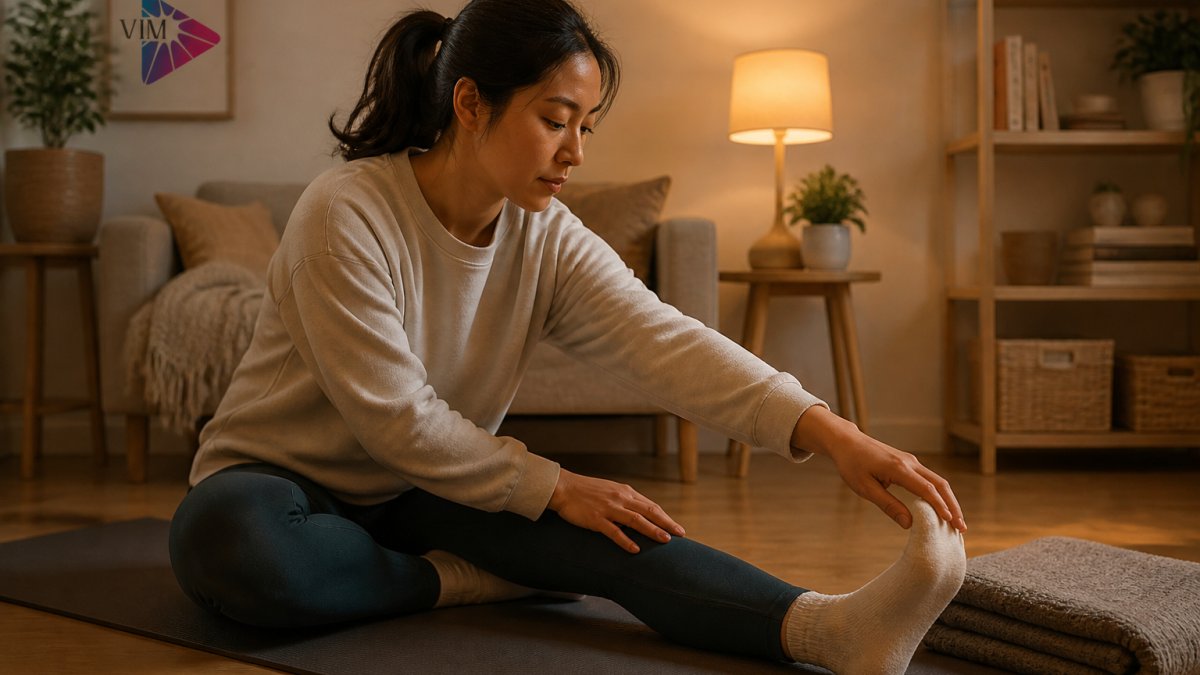
- Hamstring stretch (45 seconds each leg). Sit with one leg extended. Reach gently toward the toes of the extended leg.
- Seated figure-four (45 seconds each side). Sit in a chair. Rest one ankle on the opposite knee and lean forward slightly.
- Ankle circles (30 seconds each foot). Lift one foot and draw slow circles in both directions.
- Toe curls (30 seconds). Curl your toes down, hold, then spread them wide.
- Standing forward fold (30 seconds). Bend at the hips with soft knees and let your arms hang.
Keep movements slow. Rushing defeats the purpose.
Leg Massage for Tingling Sensations: A Step-by-Step Routine
Leg massage for tingling sensations gives your legs steady, calming input. A slow five-minute self-massage can loosen tight muscles and shift your attention away from the prickling feeling.
How to massage your legs at home:
- Sit somewhere comfortable with your legs supported.
- Warm a small amount of lotion or oil in your hands.
- Start at the ankle and work upward with slow, firm strokes.
- Use your thumbs in small circles along the calf.
- Knead the muscle gently between your thumb and fingers.
- Finish with light, sweeping strokes from ankle to knee.
- Repeat on the other leg.
Keep the pressure comfortable. Firm but never painful.
Targeted Pressure Under the Foot
The arch of the foot is packed with sensitive spots, and steady pressure there can feel calming at the end of the day. This is the idea behind the VIM Band for Restless Leg Relief.

The band uses a soft EVA foam ball to apply targeted pressure under the arch of the foot.
The set comes with two bands, one for each leg, and the adjustable, non-slip design keeps the pressure ball in place. See the full details on the VIM Band for Restless Leg Relief page.
A light spray-on option can pair well with massage.
Heat, Cold, and Everyday Habits That May Help
Heat and cold are the two most common comfort tools for leg tingling, and they do different jobs. Warmth relaxes tight muscles and feels soothing. Cold can calm a hot, irritated area. The trick is knowing which to reach for, how long to apply it, and when to stop.
VIM Band for Restless Leg Relief →
Heat: Soothing, but Keep It Timed
Warmth is usually the first thing people try in the evening. A warm bath or foot soak for 10 to 15 minutes is a simple way to unwind before bed. A heating pad or warm towel on the calf works too, but keep it to about 15 to 20 minutes and always place a cloth between the heat source and your skin.
Cold: For Hot, Irritated, or Swollen Spots
If an area feels hot, swollen, or irritated, an ice pack wrapped in a cloth for 10 to 15 minutes may feel better. Never place ice directly on bare skin or leave it on while you sleep. Some people alternate heat and ice, but pick whichever feels calming and stop if it does not.
Everyday Habits That Support Leg Comfort
Small daily choices often matter more than any single remedy. Build these into your week:
- Move often. Stand up and walk for a minute every hour during long sitting stretches. On flights, set a reminder to get up when the seatbelt sign is off.
- Check your shoes and socks. Tight footwear, elastic cuffs, or socks that dig in can press on the leg. Loosen or swap them when you notice pressure lines.
- Stay hydrated. Keep water nearby through the day, especially in dry or heated rooms.
None of these is a cure. Together they make the legs feel better and the evening calmer.
A Note on Cause-Specific Triggers
Tingling does not always have the same root, and the habit that helps depends on the pattern. Long sitting, tight shoes, and cold rooms are everyday triggers you can adjust on your own. If tingling keeps returning, spreads, or comes with weakness or numbness, see a healthcare professional rather than layering on more home remedies. This article covers comfort measures only.
Building a Bedtime Routine for Restless Legs
A bedtime routine for restless legs works best when it starts well before you get into bed. The aim is to arrive at bedtime already relaxed, not to fight the tingling once it starts.
Build the routine in this order:
- Two hours before bed: finish heavy meals and alcohol.
- One hour before bed: dim the lights and put screens away.
- Thirty minutes before bed: do the stretch sequence or a short leg massage.
Consistency beats intensity: the same short routine, done most nights, works better than an elaborate one you skip.
Tracking Your Symptoms and Knowing What to Change
Tracking turns guesswork into a plan, and it costs nothing and takes two minutes. A note on your phone or a small notebook by the bed is enough. The goal is not to become a scientist but to spot patterns so you can adjust what you do and, if needed, bring clear information to a healthcare professional.
A Simple Symptom Log You Can Copy
Each night, jot down three things:
- Time: When did the tingling start, and how long did it last?
- Location: Which leg, and where on the leg (calf, foot, thigh, both sides)?
- Intensity: Rate it 1 to 10, where 1 is barely noticeable and 10 is hard to ignore.
A paper grid with those three columns works as well as an app. The point is consistency, not format.
How to Read Your Log After Two to Three Weeks
Patterns usually show up within two to three weeks. Look for three things:
- Timing patterns. Does tingling cluster on long-sitting days, travel days, or nights after alcohol? If so, that trigger is worth testing by changing one thing at a time.
- Response patterns. Does the stretch sequence help most nights? Does warmth help more than cold? Does the VIM Band fit naturally into your wind-down? Keep what works and drop what does not.
- No-pattern patterns. If nothing seems to help, or the tingling is getting worse, that is useful information too, a clear signal to see a healthcare professional rather than keep experimenting at home.
A Simple Review Rhythm
Once a week, take five minutes to review your notes and ask three questions:
- What was the best night this week, and what was different about it?
- What was the worst night, and what was different about that one?
- What is one small change I want to test next week?
Change one thing at a time. If you change five things at once, you will not know which one helped.
When to Stop Tracking and See a Professional
Tracking is a comfort and pattern tool, not a diagnostic one. If tingling keeps disrupting sleep, gets worse over time, spreads, or comes with weakness, numbness, or trouble walking, see a healthcare professional. Bring your notes.
For general background on nerve-related sensations, the National Institute of Neurological Disorders and Stroke publishes plain-language information. The CDC also covers how blood sugar and lifestyle habits affect overall health. And the Office of Disease Prevention and Health Promotion outlines physical activity guidance that supports everyday movement.
Frequently Asked Questions
How can I get rid of numbness and tingling in my legs at home?
Start with simple movement: stand up, walk around for a few minutes, then do a few gentle calf and hamstring stretches. A slow leg massage from ankle to knee can also help you feel more comfortable. Many people find that a warm bath or a warm compress before bed makes tingling less distracting. If tingling keeps returning, spreads, or comes with weakness, numbness that won't fade, or balance problems, see a healthcare professional rather than relying on home remedies alone.
Can stretching or massage help with uncomfortable leg sensations?
Gentle stretching and massage are two of the most practical natural remedies for leg tingling sensations because they're free, easy to do, and simple to fit into your day. A hamstring stretch, calf stretch, and slow ankle circles take about five minutes. For massage, work upward from the ankle with light-to-medium pressure for a few minutes per leg. These habits won't address every cause of tingling, but they often make legs feel calmer and less jittery, especially in the evening.
What can I do when leg tingling makes it hard to relax at night?
Try a short wind-down routine: dim the lights an hour before bed, do a few gentle stretches, then massage your legs or use targeted pressure under the arch of the foot while seated or lying down. The VIM Band is a drug-free, non-electronic option designed for this kind of quiet, seated use, typically for 10 to 15 minutes. Keep the room cool and avoid alcohol close to bedtime, since it can make nighttime tingling more noticeable for some people.
When should I talk to a healthcare professional about leg tingling?
Book an appointment if tingling is persistent, gets worse over time, affects both legs equally, or comes with numbness, muscle weakness, balance problems, or skin changes. Seek emergency medical attention for sudden weakness or numbness, especially on one side of the body, or for new loss of bladder control. For persistent or worsening tingling, a healthcare professional can help identify possible causes and determine whether treatment is needed.