

Buy Natural RLS Relief Band: A Buyer's Guide
Table of Contents
- What Is a Natural RLS Relief Band?
- Foot Pressure Band for Restless Legs: How It Works
- Alternatives to Compression Socks for Restless Legs During Sleep
- Natural Restless Legs Comfort Options: What to Consider
- Key Features to Look for in a Relief Band
-
Common Mistakes When Choosing a Restless Leg Band
- Mistake 1: Expecting a medical solution
- Mistake 2: Expecting instant or guaranteed results
- Mistake 3: Ignoring how you will actually use it
- Mistake 4: Shopping on price alone
- Mistake 5: Overlooking ownership details
- Mistake 6: Assuming one band fits every situation
- Mistake 7: Not giving it a fair trial
- A quick pre-purchase checklist
- Frequently Asked Questions
Last Updated: October 19, 2026
What Is a Natural RLS Relief Band?
A natural RLS relief band is a wearable wellness device designed to provide drug-free comfort for people experiencing restless, jittery, or uncomfortable legs. Unlike electronic devices, it uses simple, targeted pressure without batteries, charging, or complicated controls.
The VIM Band exemplifies this category. It's a soft, adjustable band that uses an EVA foam ball to deliver gentle, sustained pressure under the arch of the foot. Designed for use while seated or lying down, it's practical for home relaxation, office work, or travel.

The appeal of a natural relief band is its simplicity. Many people exploring options for restless legs want something they can toss in a bag, use anywhere, and understand immediately. A natural rls relief band fits that need, offering a non-invasive alternative to compression socks, heating pads, or more complex devices.
Foot Pressure Band for Restless Legs: How It Works
A foot pressure band applies gentle, consistent pressure to specific areas under the foot.
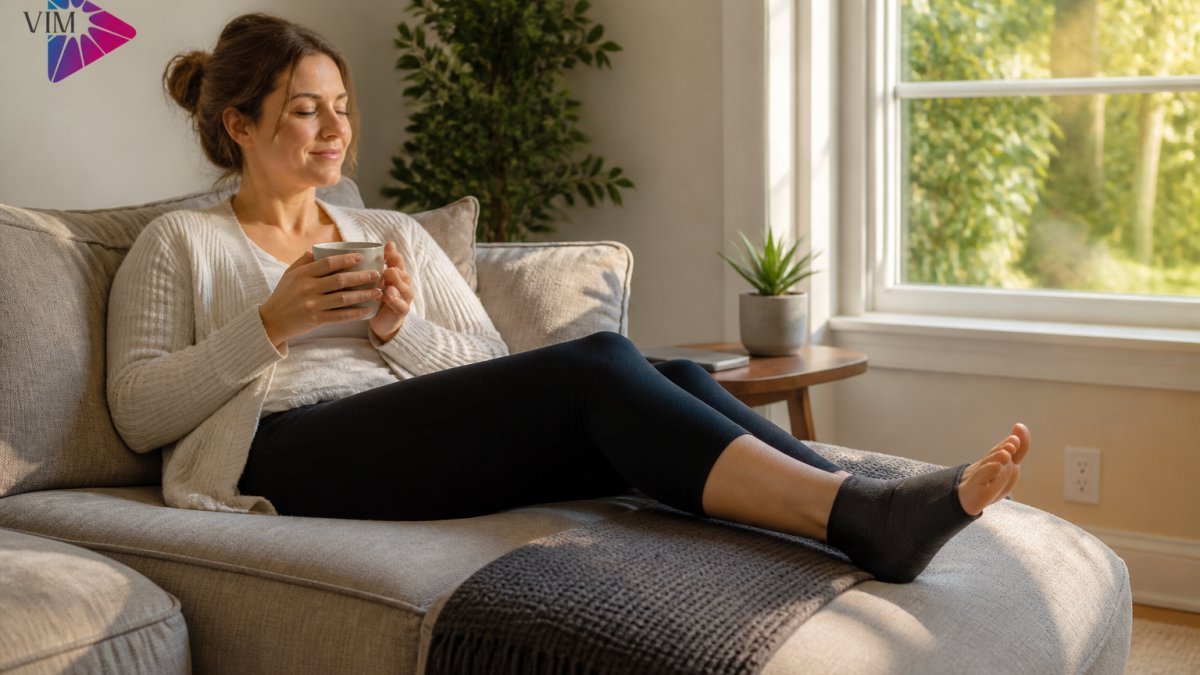
The foot pressure band for restless legs is straightforward to use. Position the soft EVA foam ball beneath the arch or padded ball of your foot, adjust the band for a comfortable fit, and enjoy gentle, targeted pressure while seated or lying down. Use for approximately 10–15 minutes per session while awake. Do not stand or walk while wearing the VIM Band.
What sets this approach apart is portability and ease. A foot pressure band weighs almost nothing, fits in a travel bag, and requires no setup.
The VIM Band includes two bands, one for each leg, so you can address both sides if needed. The soft fabric is designed for comfort, and the adjustable band accommodates most foot sizes.
Alternatives to Compression Socks for Restless Legs During Sleep
Compression socks are a common suggestion for leg comfort, but they're not the only option, and they're not ideal for everyone. A natural rls relief band offers a different approach worth considering, especially for bedtime use.
Compression socks apply graduated pressure up the leg, which some find helpful during the day.
A foot pressure band takes a different route. Instead of full-leg compression, it delivers targeted pressure exactly where you position it, typically under the foot arch. This localized approach means:
- No full-leg tightness or heat buildup
- Easier to adjust or remove without disrupting your entire setup
- No need to find the right compression level or size
- Works well under blankets without overheating
For people seeking alternatives to compression socks as part of their bedtime routine, a foot pressure band offers a different approach to comfort. The VIM Band can be used while relaxing in bed for approximately 10–15 minutes while awake and should always be removed before falling asleep.
Some people prefer compression socks during the day and a foot pressure band as part of their evening relaxation routine. Others may prefer targeted foot pressure alone. The VIM Band should only be used while awake, seated or lying down, and removed before sleeping. The choice depends on your personal comfort and routine.
Natural Restless Legs Comfort Options: What to Consider
When exploring natural restless legs comfort options, several factors deserve attention. Understanding what matters most to you will help you choose the right tool.
Portability and convenience. If you travel frequently or need something for work, a lightweight foot pressure band wins. It packs into any bag and requires no setup.
Ease of use. A foot pressure band requires no learning curve. You put it on, adjust it, and use it, no apps, no charging, no complexity.
Cost and durability. Foot pressure bands are typically affordable and long-lasting.
Flexibility in use. You can wear a foot pressure band while sitting, lying down, watching TV, working, or traveling.
Non-electronic approach. If you prefer to avoid devices that require charging, a foot pressure band is ideal, no batteries, no Bluetooth, no updates. That appeals to people who want simplicity and reliability.
Key Features to Look for in a Relief Band
Most relief band pages list the same features: soft fabric, adjustable fit, a pressure ball, portability. That checklist is a starting point, not a decision tool. What separates a band you use every night from one that ends up in a drawer is how those features line up with your routine. Match features to use cases rather than shopping by bullet points.
VIM Band for Restless Leg Relief →
Match the band to your primary use case
Bedtime and wind-down routines. If your goal is a calm pre-sleep routine, prioritize a band that stays in place while you lie down and doesn't add heat or bulk under blankets. A foot-focused band like the VIM Band keeps the rest of your leg free. Look for soft fabric and a pressure element that maintains its shape through repeated 10–15 minute relaxation sessions while seated or lying down and awake.
Travel and long sitting. For flights, trains, road trips, or long desk sessions, weight and packability matter most. A band that folds flat into a carry-on or desk drawer gets used; a bulky one doesn't. Check that it has no batteries, chargers, or app pairing, since those add friction when you're away from home.
Shared households. If more than one person wants to try a band, adjustability and a two-band pack matter. A design that fits a range of foot sizes means one purchase covers different people.
Features that genuinely change the experience
- Pressure element quality. A soft EVA foam ball that holds its shape gives consistent pressure use after use.
- Fabric against skin. Since the band sits against the foot, non-irritating fabric matters for regular use. If you have sensitive skin, favor soft, smooth materials.
- Adjustability range. Look for an adjustable strap that lets you set a snug but comfortable position.
- Stability during use. The pressure point should stay where you place it while you are seated or lying down.
- Simplicity. Non-electronic, drug-free designs have no charging, no batteries, and no controls. That simplicity is the feature for many buyers.
Features that matter less than they seem
Color and style are personal but rarely affect how often you use a band. Packaging and accessories add perceived value, not daily usefulness. A higher price doesn't automatically mean better materials, and a lower price doesn't mean poor quality. Focus on the pressure element, fabric, fit, and stability, then let price follow.
A simple decision path
- Write down where you will use the band most: bed, travel, desk, or a mix.
- If bed is primary, prioritize stability and soft fabric.
- If travel is primary, prioritize weight and no-charge simplicity.
- If multiple people will use it, prioritize adjustability and a multi-band pack.
- Confirm the pressure element is a soft foam ball that holds shape, and that the band is reusable.
That path narrows the field faster than any feature checklist and keeps the decision grounded in how you actually live.
Common Mistakes When Choosing a Restless Leg Band
The most common mistakes aren't about picking the wrong brand, they're about mismatched expectations and unclear ownership. This section focuses on what to expect, how to evaluate long-term value, and when a band simply isn't the right fit.
Mistake 1: Expecting a medical solution
A natural relief band is a wellness and comfort tool, not a treatment. It provides simple, targeted pressure under the foot and is intended for use while seated or lying down. It does not diagnose, treat, cure, or prevent any condition, and it is not a replacement for medical care. If your leg discomfort is persistent, severe, or interfering with daily life, talk with a qualified healthcare professional. A band can be part of a comfort routine, but it should not be the only thing you rely on.
Mistake 2: Expecting instant or guaranteed results
Typical use of the VIM Band is approximately 10–15 minutes per session, but that is a recommended usage duration, not a guarantee of relief or a specific result. Some people find the pressure sensation pleasant and calming; others do not. Individual response varies, and a band works best as a consistent part of a wind-down or sitting routine rather than a one-time fix. Give it a fair trial across several sessions before deciding whether it suits you.
Mistake 3: Ignoring how you will actually use it
A band that's awkward to put on, shifts while you lie down, or feels bulky under blankets won't get used. Before buying, think through your routine: Where will you sit or lie? Will you be under covers? Will you travel with it? The best band fits your routine with the least friction. For many people, a simple, non-electronic, drug-free design with an adjustable fit is easier to keep using than a complex device.
Mistake 4: Shopping on price alone
Price is a poor proxy for value in either direction. Evaluate the pressure element, fabric, adjustability, and stability first, then compare price against how often you'll use it. A reusable band you use regularly is a better value than a single-use option, regardless of sticker price.
Mistake 5: Overlooking ownership details
Ownership matters more than the initial purchase. Ask yourself:
- Charging and batteries. Non-electronic bands have none, which removes a common point of failure and ongoing cost.
- Cleaning and care. A reusable band should be easy to keep clean.
- Durability. A soft foam ball that holds its shape and fabric that resists wear.
- Return policy and warranty. Check the seller's policy before buying, since comfort is personal and a trial period reduces risk.
- Replacement parts. If a band relies on a specific component, confirm that the band is designed to last.
Mistake 6: Assuming one band fits every situation
If multiple people will use it or you plan to use it in different settings, prioritize adjustability and a multi-band pack. The VIM Band, for example, is designed as a two-band set with an adjustable fit and a soft EVA foam ball, which suits shared use and a range of foot sizes.
Mistake 7: Not giving it a fair trial
Buying a band and trying it once is not a real test. Use it consistently for several sessions in the setting where you need it most, whether that is bedtime, travel, or desk work. If it does not fit your routine after a fair trial, consider a different approach.
A quick pre-purchase checklist
- I understand this is a comfort and wellness tool, not a treatment.
- I know where and when I will use it most.
- I have checked the pressure element, fabric, adjustability, and stability.
- I have reviewed cleaning, durability, and return policy details.
- I have realistic expectations and a plan to try it consistently.
Avoiding these mistakes will not guarantee a perfect purchase, but it will keep you from expecting the wrong thing from the right product, or the right thing from the wrong one.
Frequently Asked Questions
How is a pressure band different from compression socks?
Compression socks apply steady pressure along the entire leg, while a foot pressure band delivers targeted pressure to the arch and sole of the foot. Foot pressure bands offer a different approach to comfort, using localized pressure rather than compression along the leg. The VIM Band is adjustable and designed for approximately 10–15 minutes of use while seated or lying down and awake, with individual experiences varying. They're also easier to wear discreetly under clothes or while traveling. Both are drug-free options, but they work through different mechanisms and suit different preferences and situations.
Can I use a natural RLS relief band while lying down?
Yes. Relief bands are designed to be used while seated or lying down, making them ideal for bedtime routines or relaxing at home. This is one of their key advantages over other options that may require you to be upright or moving. Using a band while lying down is a common and effective way to incorporate it into your evening wind-down.
What should I look for when choosing a non-electronic wellness band?
Look for an adjustable fit, soft fabric, a comfortable pressure element, and reusable construction. Review care instructions, and check customer reviews for feedback on comfort and durability. Check customer reviews for comfort and reliability. Avoid bands with complicated setup, electronic components you'll need to charge, or materials that feel harsh on skin. The VIM Band features adjustable soft fabric and a soft EVA foam pressure ball designed to provide targeted pressure beneath the foot during seated or lying-down relaxation sessions.
Is a wellness band a substitute for medical care for restless legs?
A pressure band is a complementary wellness tool, not a replacement for medical advice or treatment. If you're experiencing ongoing discomfort, consult a qualified healthcare professional to understand what's causing it and explore all your options. Many people use pressure bands alongside other approaches as part of their overall wellness routine. Your doctor can help you determine what's right for your situation.